These three walking aids solve different problems. Picking the wrong one is one of the most common (and most fixable) causes of falls and abandoned equipment in Australian homes.
A walking stick gives mild balance support for one side; a walking frame gives maximum stability but is slow and needs to be lifted with each step; a rollator (wheeled frame) gives good stability at walking pace, plus a seat to rest on. The right choice depends on how much support is genuinely needed, not on which one "looks least like admitting a problem".
A walking stick provides a small amount of extra balance and load-sharing, mainly useful for mild instability, early arthritis, or supporting a slightly weaker leg. It's held on the stronger side, opposite to the weaker leg, since this is how it best redistributes weight during walking.
Best for: mild balance concerns, one-sided weakness, or as a "just in case" aid for longer outings when overall mobility is still good.
Not enough if: there's been a fall in the last 12 months, both legs are affected, or balance feels unreliable on uneven ground. A cane doesn't provide the base of support needed in these cases.
A standard walking frame is lifted and placed forward with each step, giving a wide, very stable base of support. This trade-off (maximum stability for reduced walking speed) makes it well suited to indoor use, recovery from surgery, or significant balance impairment.
Best for: post-surgical recovery with weight-bearing restrictions, significant balance impairment, or short indoor distances where stability matters more than speed.
Not ideal if: the person needs to cover longer distances, since the constant lift-and-place motion is tiring and slow compared to a rollator.
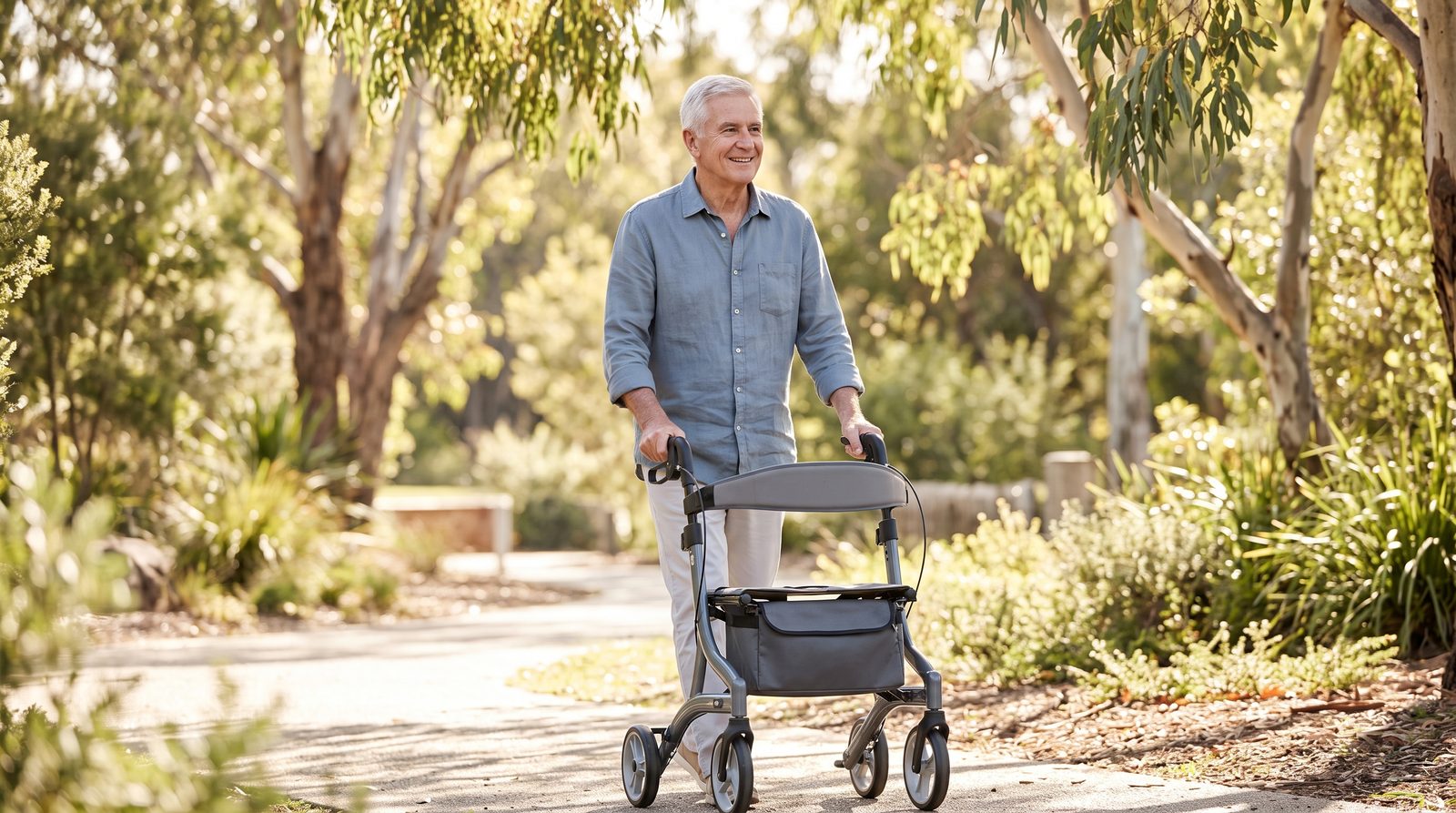
A four-wheel rollator rolls instead of being lifted, matching a more natural walking rhythm while still giving substantial stability. Most include hand brakes and a seat, letting the user rest during longer outings without needing to find somewhere to sit.
Best for: anyone who needs more support than a cane but wants to maintain walking speed and distance, especially for trips to shops, appointments, or walks outside the home.
Consider terrain: larger wheels handle uneven footpaths and slight gradients better than small caster wheels, worth checking if it will be used mainly outdoors.
Many falls happen because someone uses a cane when their actual balance and endurance call for a rollator, often from a wish to avoid "looking like" they need more support. A physiotherapist assessment, focused on actual balance and walking endurance rather than appearance, produces safer outcomes than guessing.
Walking aids are commonly funded through NDIS Assistive Technology funding or a Home Care Package. See our funding guide for the process.
This is general guidance. A GP, physiotherapist, or occupational therapist can assess actual balance, strength and walking endurance to confirm which walking aid is genuinely appropriate.
Real Australian stock, clear pricing, fast delivery.
Shop Walking Aids